South Florida's tropical climate means outdoor humidity levels regularly exceed 70-80%. While your AC system does remove some moisture from the air, many homeowners still struggle with that sticky, clammy feeling indoors. If your home feels humid even with the AC blasting, here's why — and what you can do about it.
How Your AC Controls Humidity
Your air conditioner wasn't designed primarily as a dehumidifier, but it does remove moisture as a byproduct of cooling. As warm, humid air passes over the cold evaporator coil, moisture condenses on the coil and drains away. However, several factors can prevent this process from working effectively.
Common Causes of Indoor Humidity Problems
1. Oversized AC System
This is the most common cause of humidity problems in South Florida. An oversized system cools the air too quickly, reaching the thermostat's set temperature before it has time to adequately dehumidify. The system cycles off, the humidity remains, and you feel uncomfortable even though the temperature reads correctly. This is called "short-cycling."
2. Single-Speed System on Mild Days
Single-speed compressors run at full blast or not at all. On mild days (75-82°F), they cool the air quickly and shut off before removing enough moisture. Variable-speed and two-stage systems solve this by running longer at lower speeds, providing continuous dehumidification.
3. Leaky Ductwork
If your ducts have leaks in the attic or crawl space, they pull in hot, humid outdoor air and mix it with your conditioned air. This can add significant moisture to your home, especially in South Florida where attic temperatures can exceed 140°F.
4. Poor Ventilation and Air Sealing
Gaps around windows, doors, and plumbing penetrations allow humid outdoor air to infiltrate your home. While some fresh air is necessary, excessive infiltration overwhelms your AC's dehumidification capacity.
5. Fan Set to "ON" Instead of "AUTO"
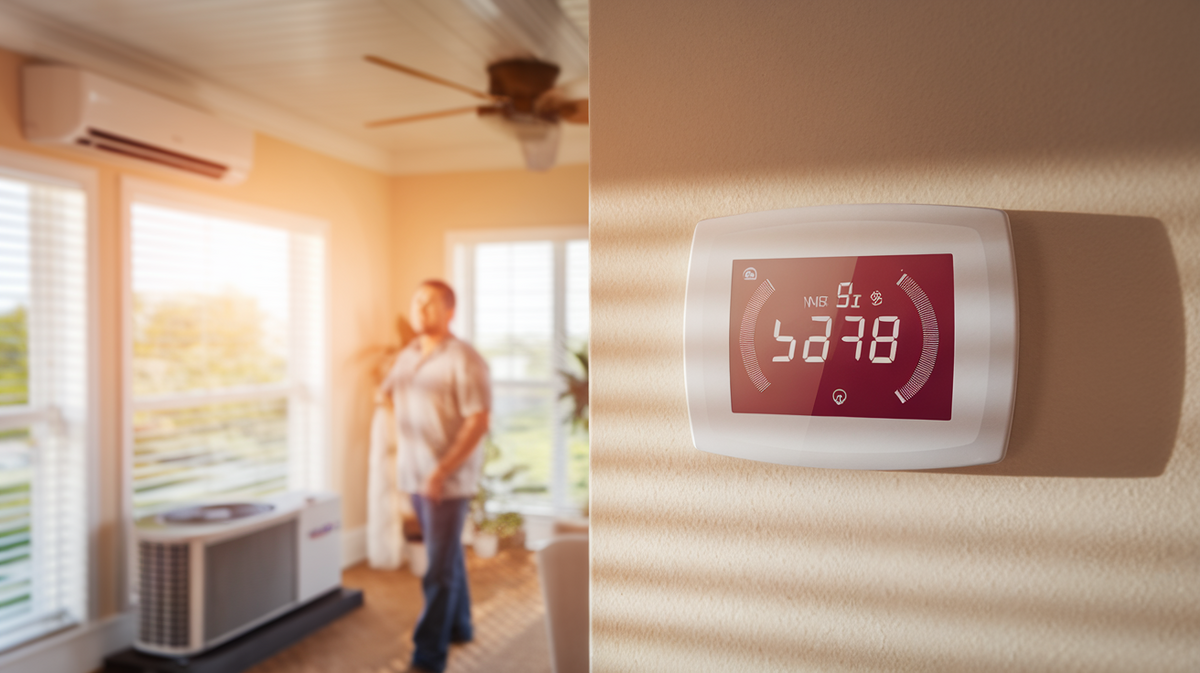
When your thermostat fan is set to "ON," the blower runs continuously — even when the compressor is off. This blows moisture that collected on the evaporator coil back into your home before it can drain away. Always set your fan to "AUTO."
Solutions for Better Humidity Control
Whole-Home Dehumidifier
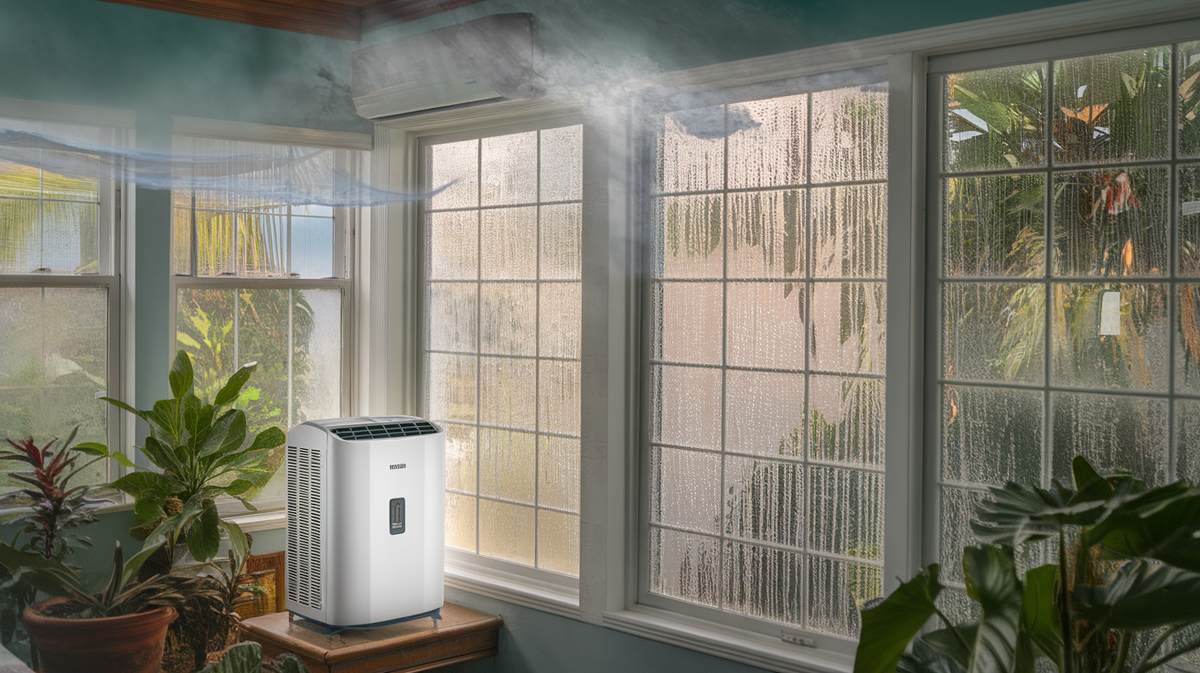
The most effective solution for South Florida homes. A whole-home dehumidifier installs into your existing ductwork and works alongside your AC to maintain optimal humidity (45-55%) regardless of temperature. These units remove 70-100 pints of moisture per day.
Variable-Speed HVAC System
Upgrading to a variable-speed system is a game-changer for humidity control. These systems run at lower speeds for longer periods, maximizing moisture removal while using less energy.
Duct Sealing
Having your ductwork professionally sealed prevents hot, humid air from entering the system and eliminates one of the biggest sources of indoor humidity problems.
Smart Thermostat with Humidity Control
Modern smart thermostats like the Ecobee and certain Honeywell models include humidity sensors and can adjust your AC's operation to prioritize dehumidification when needed.
The Ideal Indoor Humidity Level
For South Florida homes, aim for 45-55% relative humidity. Above 60%, you risk mold growth, dust mites, and that uncomfortable sticky feeling. Below 40%, you may experience dry skin and static electricity (rare in our climate).
If you're struggling with humidity in your home, contact SoFlo Cooling for a free assessment. We'll identify the source of your humidity problem and recommend the most cost-effective solution for your home.
Need AC Service in South Florida?
Our licensed technicians are ready to help with any AC repair, maintenance, or installation. Call us today or request a free quote online.